Laser-Induced Breakdown Spectroscopy (LIBS) is a powerful tool in geological analysis, offering rapid, in-situ elemental identification of rocks, minerals, and soils with minimal sample preparation. By generating a micro-plasma on the sample surface, LIBS enables real-time detection of major, minor, and trace elements, making it ideal for field-based exploration, core analysis, and geochemical mapping. Whether in the lab or the field, LIBS provides geologists with fast, accurate data essential for understanding the elemental composition and structure of geological materials.
Challenge
Educators needed a modern, hands-on approach to teach mineral analysis while introducing students to data science and machine learning—skills vital in today’s job market.
Solution
Using Avantes’ LIBS system, a university integrated laser-induced breakdown spectroscopy into their chemistry curriculum. Students collected real spectral data from mineral samples and analyzed it using machine learning techniques like PCA and classification models.

Results
A company specializing in automated mineral analysis developed the MAYAS system—a compact, conveyor-belt LIBS analyzer designed for true in-line, real-time monitoring of Ore and mineral streams.
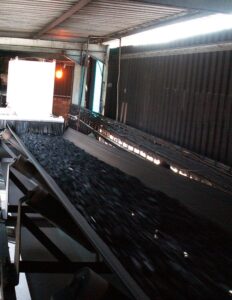

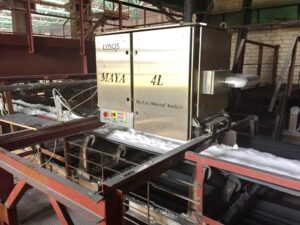

Fully in-line operation: Analyzes material directly on conveyors or in slurry lines with no sample prep.
High-speed, continuous measurement: Generates 300–500 spectra every 3–5 minutes to support dynamic process control.
Safe, non-ionizing inspection: Uses LIBS plasma excitation with no X-rays or gamma radiation, offering enhanced safety.
Precise elemental fingerprinting: Detects complete elemental profiles via plasma emission spectroscopy.
Outcome: By integrating Avantes spectrometers, the MAYAS system enabled immediate process adjustments—optimizing elemental quality, increasing yield, and reducing costly impurities through continuous, safe, and accurate analyte monitoring.
 My Cart